Portfolio

Science that
students
actually do.

I'm Dr. Ashley G. Booker, Ed.D., a secondary science teacher, curriculum designer, and published researcher at Clarkston Community Schools in Michigan. Eighteen years in the classroom. Two threads run through all of it: place-based science and responsible AI in K-12.

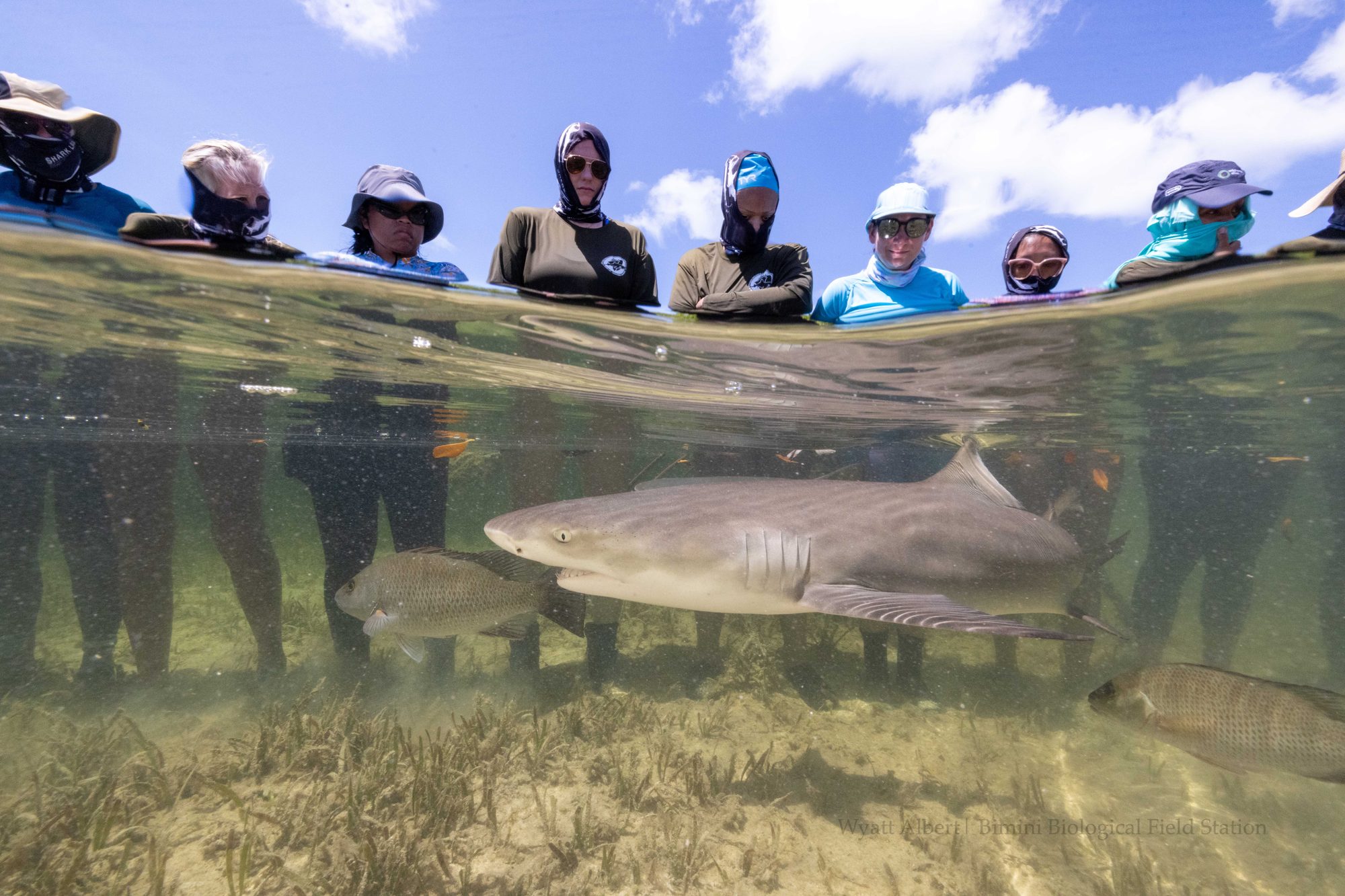
A lemon shark swims below the waterline in front of a line of researchers standing in the shallows at Bimini; Dr. Booker is the tallest, in a sun hood and dark glasses.
Bimini Biological Field Station, summer 2026. Photo: Wyatt Albert, Bimini Shark Lab.
18Years teaching science
140Biology students this year, five sections
9Unit phenomenon-driven Biology course, built from scratch
2+3Peer-reviewed articles published, three manuscripts under review
Curriculum Design

Units built around a question worth answering

Every course I build starts with a phenomenon, runs on NGSS three-dimensional learning and the 5E framework, and gives students something tangible to make, model, or argue. These are the ones I'd put in front of anyone.

9th Grade Biology, 2026-27

Biology, rebuilt as nine storylines

A complete course, Unit 00 through Unit 08, designed for integrated classrooms. Each unit anchors to a driving phenomenon, pairs a single learning target with success criteria, and includes paper check-ins, foldables, differentiation paths, and teacher plans built to survive a shortened schedule.

NGSS HS-LSStorylinesOpenSciEd B.5Differentiation
8th Grade, Grant-Funded

Three Creeks, One Community

A water-quality monitoring unit where students test real creeks in their own watershed, model human impact, and make recommendations to their community. Funded through the Clarkston Foundation; built with partners including Michigan Sea Grant and the Center for Great Lakes Literacy.

Place-basedMS-ESS3Field data
8th Grade, Project-Based

Surviving Space

A spacecraft-engineering PBL unit where teams design, test, and iterate a craft against real constraints, then defend the design with evidence. Engineering as sense-making, not product completion.

MS-ETS1PBLPerformance assessment
Middle School, Place-Based

Microplastics in the Great Lakes

A 5E lesson anchored to Lake Huron, using real data tables, food-web modeling, bioaccumulation math, and a claim-evidence-reasoning evaluation. Built for Michigan students, adaptable to any watershed.

MS-ESS3-3MS-LS2-4CER
Supplemental Resources

Science in the Movies

Film-anchored investigations (The Croods, Ice Age, Growing Up Wild) that turn a story students already love into an NGSS-aligned argument about evolution, adaptation, and ecosystems.

MS-LS4Engagement
Real Research

Students working with live scientist data

I was trained as a research diver and started out in informal education. The thing I most want my students to feel is that science is happening right now, with real animals and real people, and they can be part of it.

  • OCEARCH Shark Tracking Project. Every lab team in my Biology classes adopts a tagged shark or sea turtle and tracks it from September to May: monthly pings, movement maps, and a postcard "from" their animal. About 35 animals across five sections, one per team, no repeats.
  • Bimini Biological Field Station Teacher Fellowship (2026). Spent the summer in the field with shark scientists and research interns in Bimini, and brought the field methods and the stories back into curriculum.
  • Scientist connections. Virtual calls with working researchers are built into the year, so students hear from the people whose data they're using.
  • Research diver and REEF member. Advanced scuba diver trained in science diving; I use REEF survey resources and my own underwater experience in instruction.
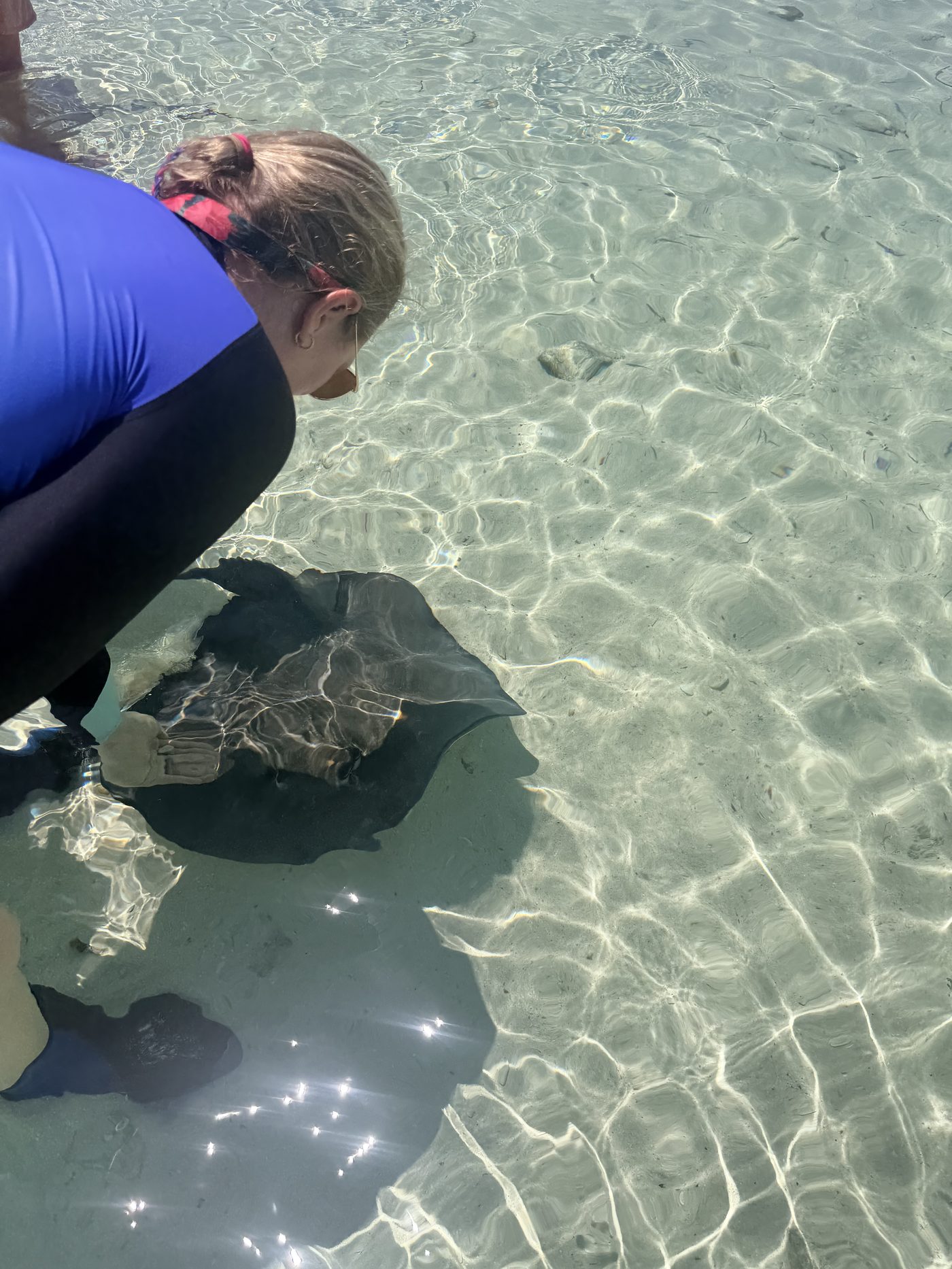
Dr. Booker bends over a southern stingray in ankle-deep water on a sand flat in Bimini.
Working with a southern stingray on the flats, Bimini.
"My students track sharks. Real ones."
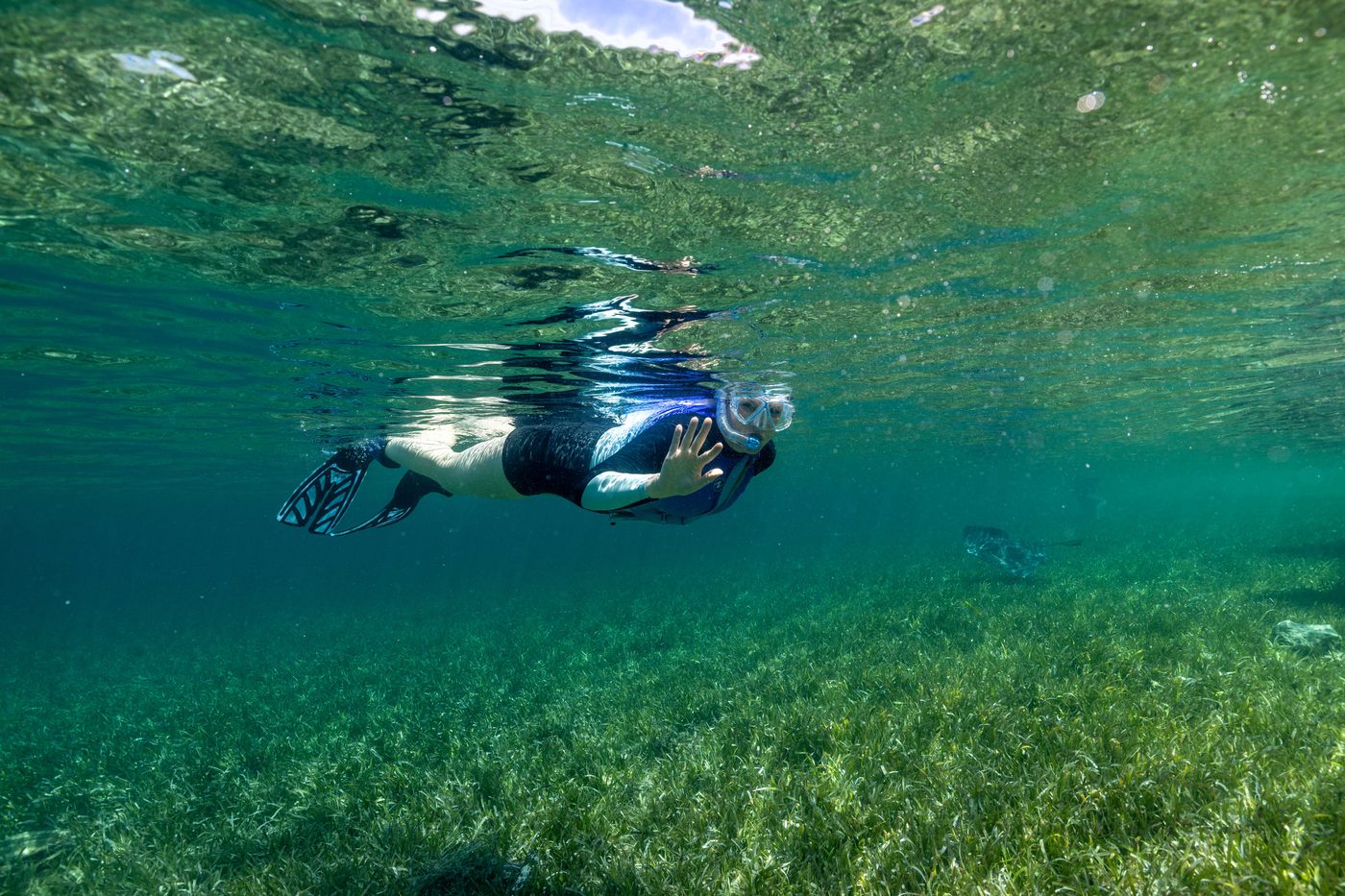
Dr. Booker snorkeling over a seagrass flat, waving at the camera.
Seagrass nursery survey.
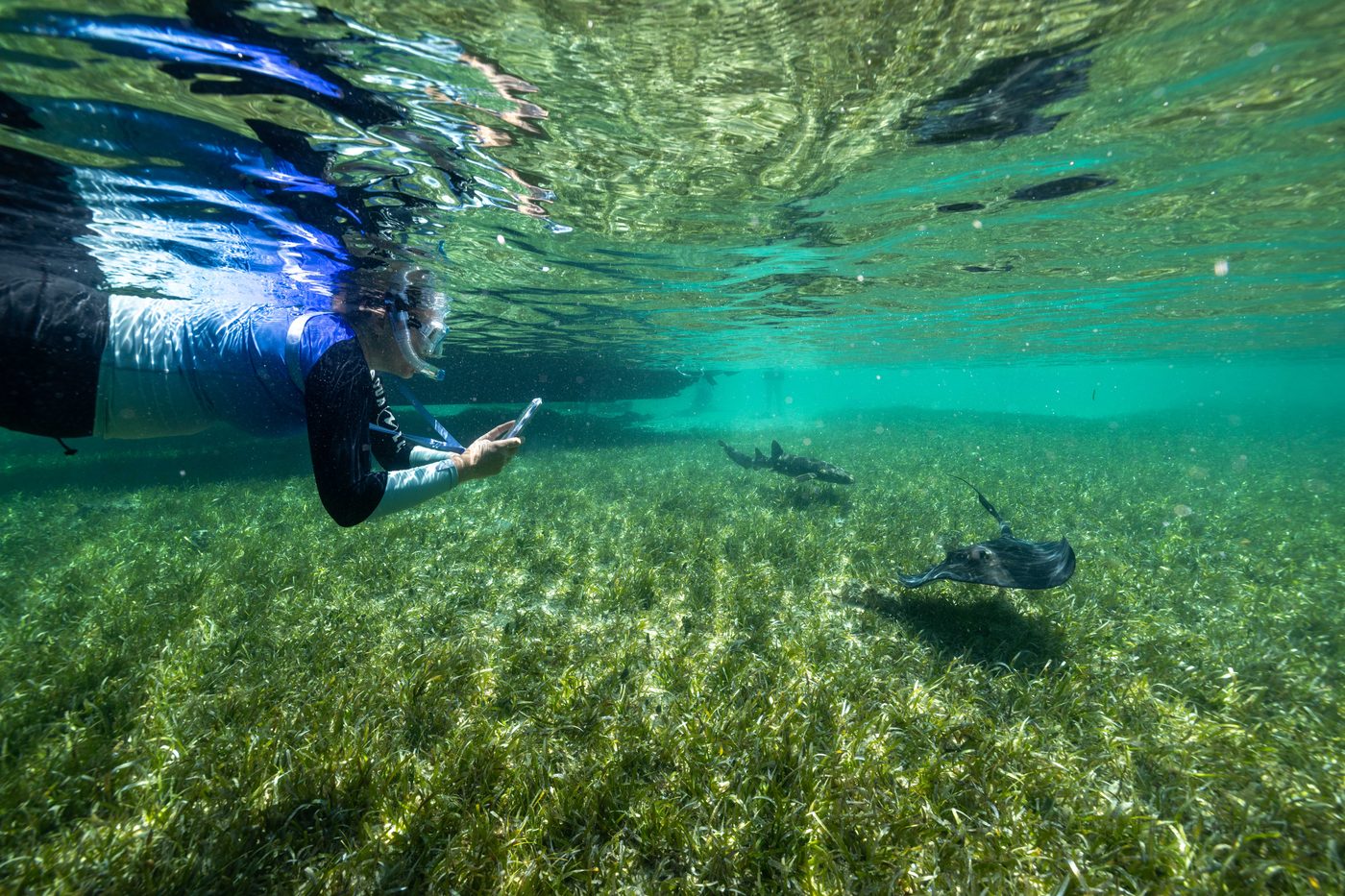
Dr. Booker at the surface photographing a stingray on the seagrass below.
Documenting a ray on the flats.
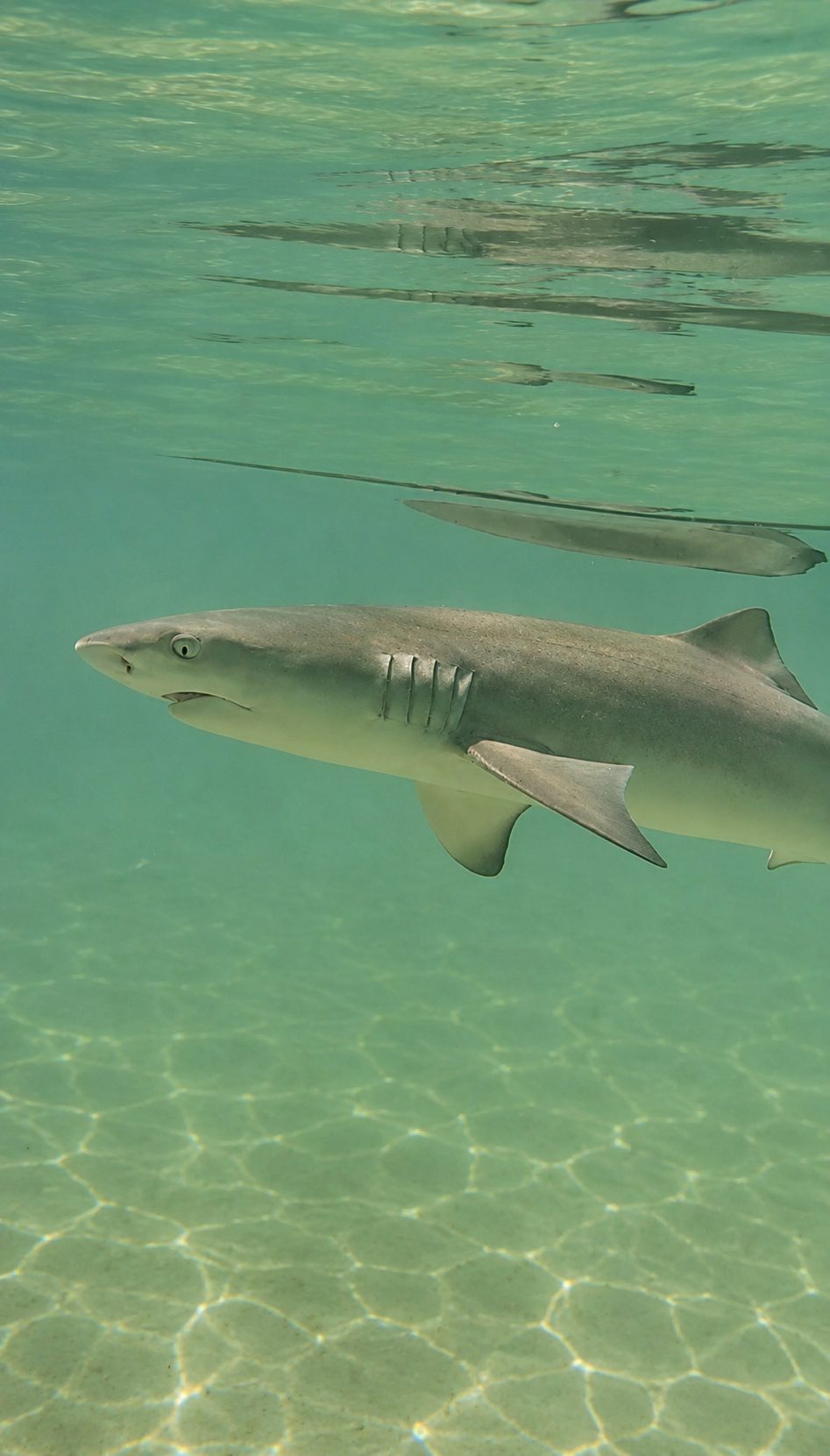
A juvenile lemon shark in clear shallow water.
Juvenile lemon shark.
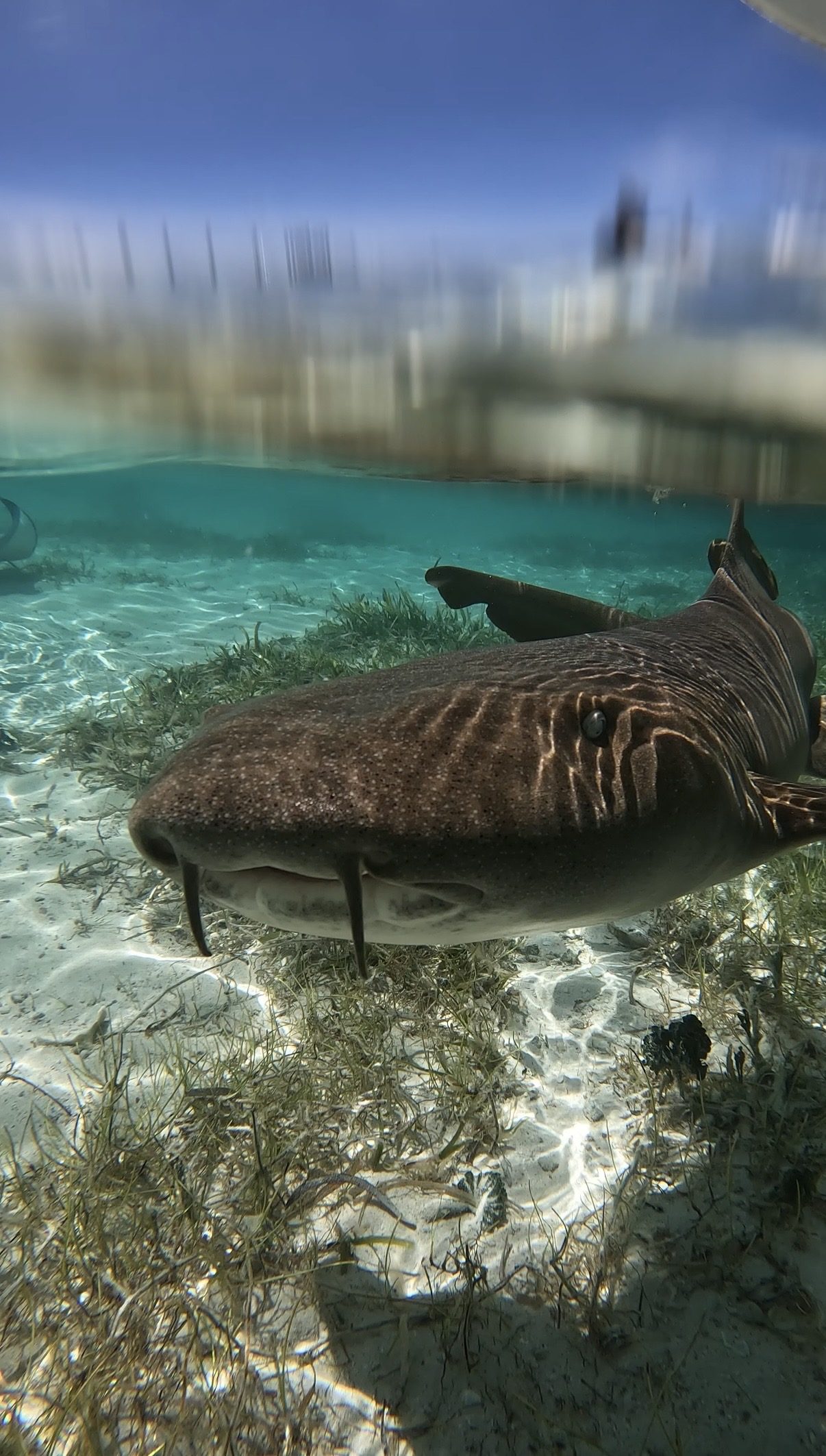
A nurse shark resting over seagrass near a dock.
Nurse shark, North Bimini.
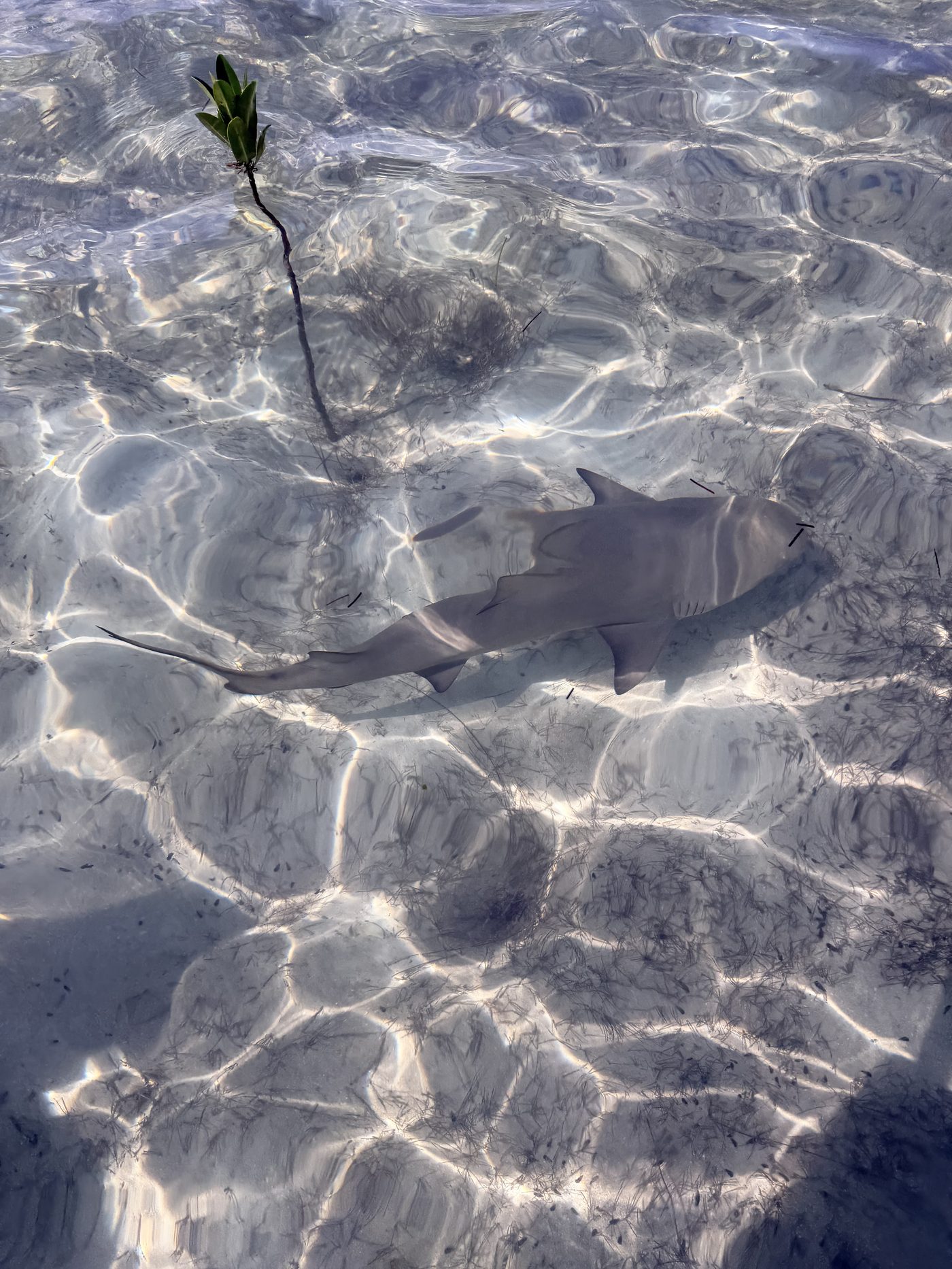
A juvenile lemon shark beside a mangrove seedling in the nursery shallows.
Lemon shark pup in the mangrove nursery.

Field photos from the Bimini Biological Field Station Teacher Fellowship, 2026. Wide-angle field photography by Wyatt Albert, Bimini Shark Lab (@wadewithwyatt).

Published Work

Writing from practice

My scholarship comes directly out of classrooms: what preservice teachers do when engineering is reframed as sense-making, what happens to students when states take elementary science seriously, and how to put real research in front of kids.

AI in Education

Responsible AI, built by a teacher who uses it

I sit on my district's AI Collective, lead AI professional learning for secondary staff, and run my own AI production workflows. The position is simple: AI should give teachers time back and keep students doing the thinking.

District Leadership

CCS AI Collective

Junior-high representative on the team writing Clarkston's AI guidance: a Red/Yellow/Green use scale built on responsible use, transparency, and human ownership of work. Facilitated the building-wide AI rollout, an educator-led mini conference, and follow-up secondary staff sessions.

PolicyStaff PD
Classroom Practice

5 to 10 hours a week, back

I use AI daily for lesson development, differentiation paths, and planning, with every student-facing document still passing through me. MagicSchool AI Pioneer and Wayground certified.

DifferentiationPlanning
Building

An AI production pipeline

Script-to-animation workflow for short science explainers (Claude for scripting, AI animation tools for rendering), plus agent-driven automations for research digests and content drafting. Active coursework in Claude Code and MCP.

Workflow designAutomation
Leadership and Service

Where I show up beyond my classroom

  • Michigan Department of Education. Grade 8 Science M-STEP Content Advisory Committee; M-STEP Data Review Committee.
  • Michigan Place-Based Education Fellow.
  • Teacher Leader and PLC Leader at Clarkston Community Schools; curriculum writer, evaluator, and professional learning instructor.
  • Higher education. Taught Science Instructional Methods for preservice elementary teachers at the University of Michigan-Flint (2026).
  • Curriculum partnerships. Michigan Sea Grant, BSCS Science Learning, MSU CREATE for STEM, Center for Great Lakes Literacy.
  • Grants. I write and win classroom grants every year to fund tools and experiences students wouldn't otherwise get.
  • Degrees. Ed.D., Educational Leadership (University of Michigan-Flint); Ed.S. and M.A., Science Education (University of Florida); Graduate Certificate, Environmental Education and Communications; B.A., West Virginia University.
  • Available for professional learning, curriculum consulting, and speaking on place-based science and AI in the science classroom.
Let's Talk

Working on something?

I'm open to curriculum collaborations, research partnerships, professional learning, and conversations about where science education and AI are headed.